
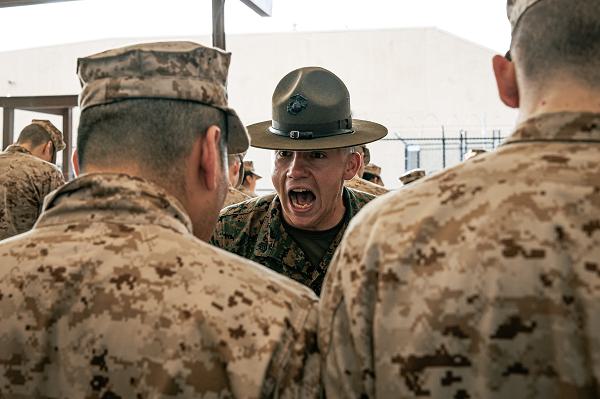
Abuses Within Military Service
Inside the military, the promises of recruitment collide with the realities of daily life. These videos bring forward the voices of service members and veterans who endured harassment, discrimination, retaliation, unsafe conditions, and the trauma that military culture can normalize. Their testimonies illuminate the human experiences often obscured beneath patriotic narratives and Hollywood portrayals, revealing how military life shapes the body, mind, and future. By listening to those who lived these abuses firsthand, we deepen our understanding of military culture and strengthen our collective ability to make informed, humane choices about the role of the military in our schools and society.

Marine recruit’s death uncovers pattern of abuse by some drill instructors
05:26 | Why did a 20-year-old recruit jump to his death at the Marine Corps training facility at Parris Island? That question spurred an internal investigation, which uncovered a larger pattern of hazing and abuse. William Brangham joins Judy Woodruff to offer a closer look at the investigation.
This PBS NewsHour report investigates the tragic death of a 20‑year‑old Marine recruit at the Parris Island training facility — a case that opened the door to a much larger, disturbing pattern of hazing and abuse within Marine Corps boot camp. What begins as a single incident quickly expands into a systemic problem: drill instructors accused of physically and psychologically tormenting recruits, violating training protocols, and creating an environment where fear replaces discipline. Through interviews and internal investigation findings, the segment reveals how certain instructors used intimidation, humiliation, and dangerous punishments that pushed vulnerable recruits past their limits. - PBS

Was This 'Good Training' or Just Pure Hazing? Marine Vet Speaks.
00:59 | Recruit hazing during training is often framed as “toughening up,” but in practice it can cross into humiliation, intimidation, and physical or psychological mistreatment. New recruits may be singled out, screamed at, forced to perform excessive or degrading tasks, or punished collectively for minor mistakes. What’s presented as discipline becomes a way to enforce obedience, break down individuality, and create fear-based cohesion. For many service members, these early experiences set the tone for a culture where abuse is normalized and speaking up feels dangerous.
As Gonzalez revisits these memories, he raises the central question of the video: where is the line between legitimate training and abuse? His reflections show how easily that line can blur inside a system built on hierarchy, conformity, and unquestioned authority. What was once praised as toughness now looks like unnecessary harm — a reminder that military culture often shifts only after veterans speak out. Gonzalez’s testimony offers viewers a rare inside look at the emotional and physical toll of such practices, highlighting how hazing can shape a recruit’s identity, mental health, and long‑term relationship with service.
'Invisible War' Shines Light on Rape in the Military
05:29 | Women in the military face a documented and pervasive risk of sexual assault, often from peers or superiors who hold direct power over their careers, housing, and daily life. What should be a professional environment becomes, for many, a place where reporting assault can lead to retaliation, isolation, or career damage. These stories reveal how military culture, hierarchy, and inadequate accountability allow abuse to persist — and why so many survivors describe feeling trapped, unheard, and unprotected while serving their country.
“‘Invisible War’ Shines Light on Rape in the Military” is a stark and urgent ABC News segment introducing the Oscar‑nominated documentary The Invisible War, which exposes the epidemic of sexual assault within the U.S. armed forces. The video highlights how rape and sexual harassment have become pervasive, systemic problems affecting service members across all branches — and how the military’s internal justice system routinely fails survivors. Through survivor testimony and investigative reporting, the segment reveals a pattern of cases ignored, buried, or mishandled, with only a tiny fraction ever reaching trial.
"Confessions of a Sailor" - Sexual Assault
07:32 | A 5 part interview series made by Coalition of Sailors Against Destructive Decisions (CSADD) as training for service members on different important issues. Seaman Sadie shares her very personal experience of rape. Thank you to all who helped put this together.
“Confessions of a Sailor – Sexual Assault” is an unflinching, deeply personal testimony from Seaman Sadie, a young sailor who recounts the trauma of being raped while serving in the U.S. Navy. Created as part of a five‑part training series by the Coalition of Sailors Against Destructive Decisions (CSADD), the video is intended to educate service members — but it resonates far beyond its original purpose. Sadie speaks plainly, without dramatization, describing how the assault unfolded, how quickly everything changed, and how the experience shattered her sense of safety and trust. Her words capture the disorienting mix of shock and slow‑motion clarity that survivors often describe: “It all happened really fast and in like slow motion at the same time.”

Invisible Wounds: Life after military sexual assault and PTSD | Veterans Coming Home
07:20 | Stacey Thompson was proud to be a woman in the Marines. But after she reported being sexually assaulted by her sergeant she was given an "other than honorable" discharge that left her without military benefits. Struggling with PTSD, Stacey waged a decade-long battle to regain her health and military honors. The military eventually acknowledged its mistake and upgraded her discharge. Mosaic art and writing help Stacey work through her PTSD and share her experience with civilians. Now, she and her husband, also a Marine veteran, are proud of the life they have built through their journey to heal.
This is a video from VETERANS COMING HOME, by the Corporation for Public Broadcasting, Kindling Group, and Wisconsin Public Television, an innovative public media project exploring the lives of post-9/11 veterans, the divide between them and their communities, and the stereotypes that veterans and civilians hold about each other.
The Army And Domestic Abuse
04:40 | Domestic abuse in the military often hides behind the discipline, hierarchy, and stress that define service life. Partners may find themselves isolated on bases, financially dependent, or afraid to report violence because the abuser’s career, rank, or command structure can shape every aspect of their daily reality. Critics say the military needs to do more about domestic violence against women. A CBS News investigation found more than 25,000 women have been victimized over the past decade. Katie Couric reports.
One of the central stories is that of Justa Patton, who survived a brutal assault by her husband, Specialist Lenny McIntyre. After returning from two tours in Iraq with the Army Rangers, McIntyre was consumed by sleeplessness, anger, and intrusive memories — especially triggered by the cries of their infant daughter, which reminded him of “the kids that he shot” and the screaming he heard in combat. His violence escalated from child abuse to a drunken, armed assault in which he beat and raped his wife. Patton describes lying on the floor for an hour afterward, crying, convinced she might die. Yet McIntyre was jailed for only one night and given extra duty — a response that underscores how the system minimizes harm to victims while protecting soldiers.

Ross Caputi, veteran, speaks to North Carolina Community College Students.
1:00:03 | Ross Caputi, veteran, speaks to North Carolina Community College Students. wearenotyoursoldiers.org
In this talk, Marine veteran Ross Caputi offers a stark, unfiltered account of his experience fighting in Iraq, speaking to students with the urgency of someone who has lived through the consequences of U.S. military policy. Caputi describes how, as a young Marine, he entered the war believing he was serving a noble mission — only to discover firsthand the devastating impact of U.S. operations on Iraqi civilians. His story centers on the 2004 assault on Fallujah, one of the most destructive battles of the Iraq War, where he witnessed the leveling of neighborhoods, mass displacement, and the suffering of ordinary people caught between insurgents and U.S. forces.
Caputi explains how Marines were trained to see Iraqis through a lens of suspicion and hostility, a mindset that made it easier to justify violence and ignore the human cost. Over time, he began to question the mission itself: why entire cities were being bombed, why civilians were treated as threats, and why the military narrative never matched what he saw on the ground. His reflections reveal the moral injury that many veterans carry — the painful reckoning with actions taken under orders, and the realization that the war’s stated goals did not align with the reality of occupation.
Speaking candidly to students, Caputi emphasizes how his experience transformed him from a willing participant in the war to a critic of U.S. foreign policy. He urges young people to look beyond recruitment slogans and patriotic framing, to understand the real consequences of military service, and to consider the lives of those on the receiving end of U.S. military power. His testimony is both a personal confession and a call for accountability, offering a rare inside perspective on the Iraq War from someone who once helped carry it out.
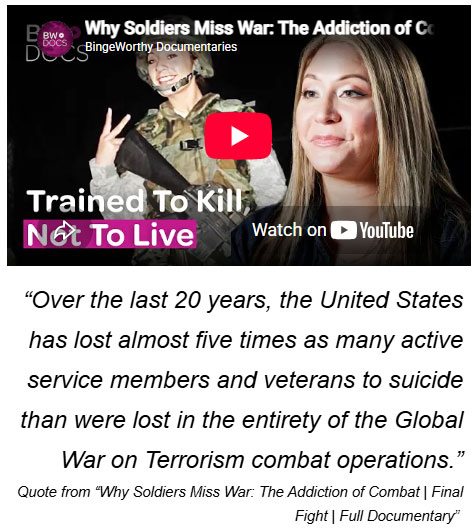
Why Soldiers Miss War: The Addiction of Combat | Final Fight | Full Documentary
1:30:41 | Largely unknown to most Americans, over the last 20 years, the United States has lost almost five times as many active service members and veterans to suicide than were lost in the entirety of the Global War on Terrorism combat operations.
Final Fight: When the Trauma of War Comes Home, goes deeper than any documentary to date in revealing the root causes of this tragic epidemic by profiling a diverse group of veterans struggling with either combat or sexual assault-related Post Traumatic Stress, a major cause of suicide. Worse, as the devastating war in Afghanistan and Iraq ground on, US military brass who struggled to fight the longest-running war in United States history, largely ignored not only the connection between traumatic brain injuries and suicide but also uncontrolled sexual assault among the rank and file. Leading experts in the field of PTS therapy and brain science offer hope and answers to the struggling veterans profiled in the series but also to the family and friends who love them.