
Defending Youth Autonomy in an Era of Intensified Militarization
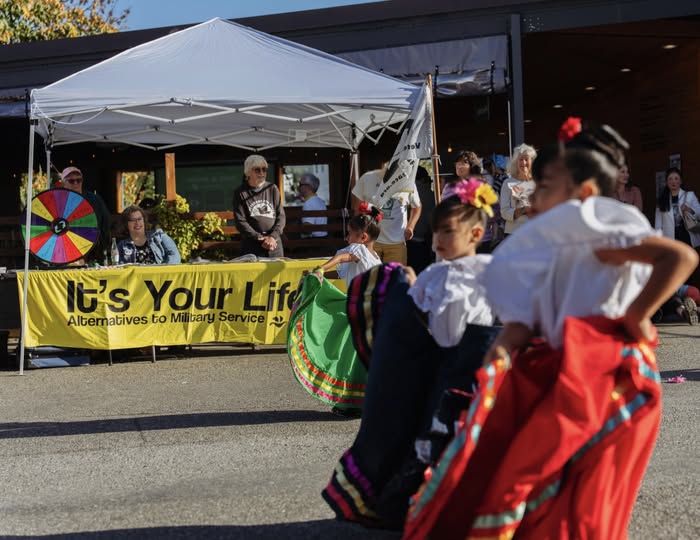
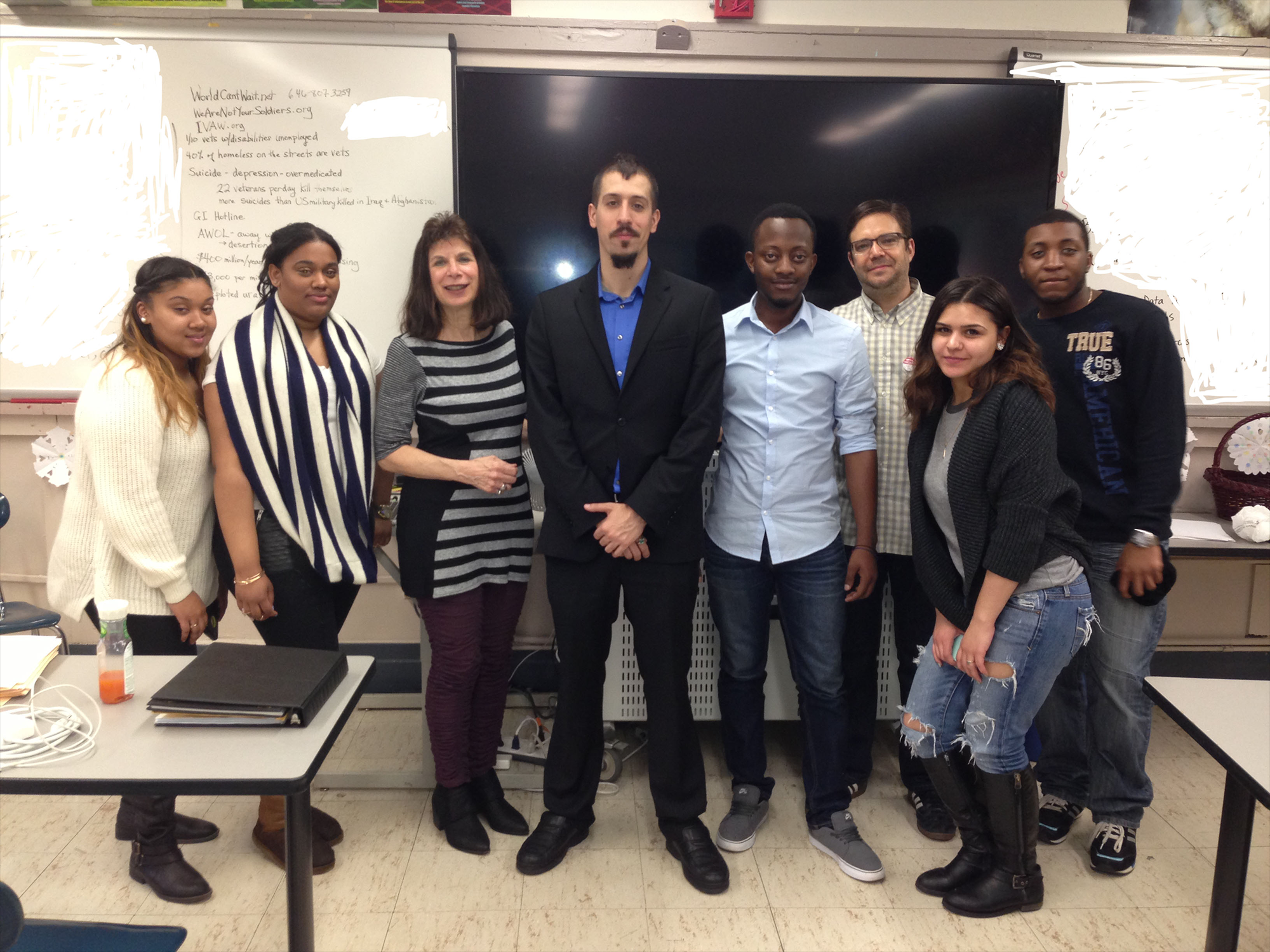
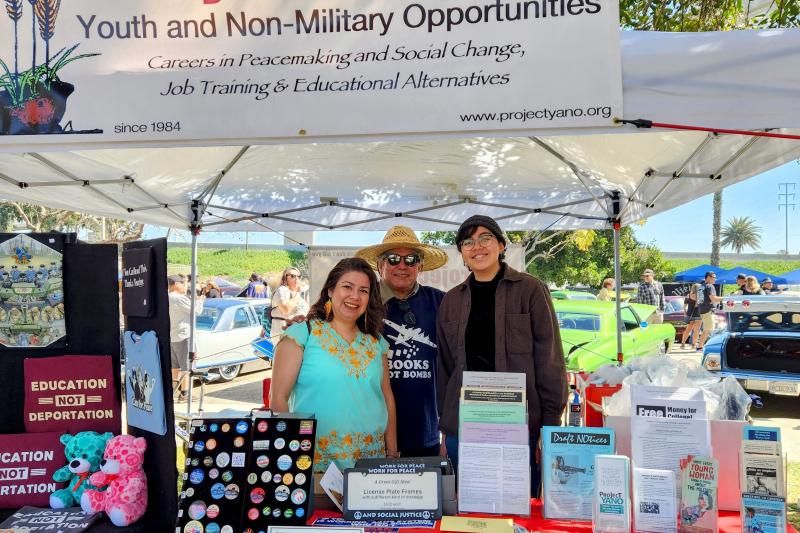
Counter‑recruitment has always been a practice rooted in community care: volunteers tabling in high schools, veterans speaking honestly about the realities of military life, organizers challenging ASVAB testing, and advocates offering young people meaningful alternatives to enlistment. The NNOMY network’s long‑standing work reflects this tradition. In Bellingham, for example, the Whatcom Peace & Justice Center has spent decades providing students with non‑military options through equal‑access tabling agreements that allow volunteers to meet youth face‑to‑face in their schools . In New York, We Are Not Your Soldiers brings veterans into classrooms to speak candidly about the psychological and ethical consequences of military service, offering students a perspective rarely found in official recruiting materials. In San Diego County, Project YANO reaches thousands of young people through school visits, community events, and policy advocacy that expands civilian career pathways.
These practices form the backbone of counter‑recruitment as it exists today. But the political and administrative landscape envisioned under Project 2025 would fundamentally alter the conditions in which this work takes place. The shift is not merely quantitative—more recruiters, more JROTC, more ASVAB testing—but qualitative. Schools would be reframed as instruments of patriotic formation, with expanded military access, reduced civil‑liberties protections, and heightened scrutiny of outside civic groups. In such an environment, counter‑recruitment activism cannot remain what it has been. It must evolve into something more resilient, more decentralized, and more explicitly focused on defending youth autonomy.
The first major transformation concerns access. Much of NNOMY’s current work depends on negotiated agreements with school districts, such as the equal‑access policy in Bellingham that allows peace volunteers to table alongside military recruiters. Under Project 2025, these agreements could be revoked or rendered meaningless. Administrators may classify peace organizations as “political” and therefore prohibited, while granting recruiters privileged access to cafeterias, assemblies, and classrooms. The result would be a school environment where military messaging saturates daily life, and counter‑recruitment groups are pushed to the margins. In response, activism would need to shift toward community‑anchored outreach—libraries, youth centers, churches, cultural spaces—where students can safely receive information without administrative gatekeeping.
Classroom‑based “Truth in Recruiting” presentations would face similar pressures. The NNOMY page describes how veterans and activists currently share their experiences directly with students, offering a rare window into the ethical and psychological realities of military service . But in a Project 2025 environment, teachers may face penalties for inviting speakers who “undermine patriotic education,” and districts may require pre‑approval for all outside presenters. This would effectively eliminate classroom access for counter‑recruitment groups. As a result, youth‑led digital media would become the new classroom: TikTok explainers, Instagram reels, Discord study groups, and decentralized peer‑to‑peer storytelling that bypasses institutional barriers.
ASVAB resistance—already a central tactic in NNOMY’s work—would become a privacy battle. The NNOMY page notes that activists challenge ASVAB testing because it functions as a data‑collection tool for recruitment . Under Project 2025, ASVAB could be reframed as mandatory “career readiness testing,” with automatic data sharing and limited opt‑out rights. Counter‑recruitment would need to expand into digital‑privacy education, teaching students how to file FERPA complaints, block data transfers, and pressure districts to adopt opt‑out defaults. Protecting youth from data‑driven recruitment would become as important as protecting them from in‑person recruiters.
JROTC expansion represents another major shift. NNOMY’s page already identifies organizing against JROTC as a core component of counter‑recruitment work . But Project 2025 envisions JROTC not as an elective program but as a central pillar of school culture, potentially mandatory for certain tracks and expanded into middle schools. Instructors could gain disciplinary authority, and JROTC curriculum may be aligned with ideological goals. Counter‑recruitment would need to support students seeking to exit JROTC, document coercive practices, and build alliances with parents concerned about militarized discipline. The work becomes not only about resisting recruitment but about resisting the normalization of military culture within childhood education.
Perhaps the most vital adaptation concerns alternatives‑to‑military outreach. NNOMY’s page highlights resources such as Project YANO’s career workshops, the Peaceful Careers website, and the Back‑to‑School Kit for demilitarization organizing . Under Project 2025, schools may reduce non‑military career counseling, job fairs may be dominated by recruiters, and economic pressure on youth may intensify. Counter‑recruitment must therefore become a parallel career‑guidance system, offering union apprenticeships, environmental restoration jobs, public‑interest tech pathways, and community‑based service opportunities. This work directly counters the “economic draft,” giving young people real choices in a landscape where official channels increasingly point toward enlistment.
Coalition‑building will also become essential.
The NNOMY page includes links to broader civic resources such as the Commons Social Change Library, emphasizing the need for activists to be both responsible citizens and principled rebels . In a Project 2025 environment, isolated peace groups become easy targets, while broad coalitions—immigrant‑rights organizations, racial‑justice advocates, digital‑privacy groups, labor unions, climate‑justice movements—become harder to suppress. Militarization touches all of these communities, and counter‑recruitment activism will need to operate within a larger ecosystem of democratic resistance.
Ultimately, the most important transformation is conceptual. Counter‑recruitment becomes youth civic self‑defense. Students must learn how to document abuses safely, file public‑records requests, speak at school board meetings, organize decentralized groups, protect their digital communications, and resist coercion even when adults cannot intervene. The work becomes not only about informing youth but about equipping them with the tools to defend their autonomy in an increasingly militarized educational landscape.
In this sense, counter‑recruitment in a Post–Project 2025 school environment is not merely a continuation of past practices. It is a reimagining of the movement’s purpose. The goal is no longer simply to “balance the narrative” of military recruiters, as the NNOMY page describes . The goal is to safeguard the civic agency of young people, ensuring that their futures remain open, self‑determined, and free from coercive militarization. This is the work ahead: decentralized, privacy‑focused, coalition‑driven, and youth‑led. It is counter‑recruitment for a new era—one in which defending the rights of students becomes an act of democratic preservation.
###