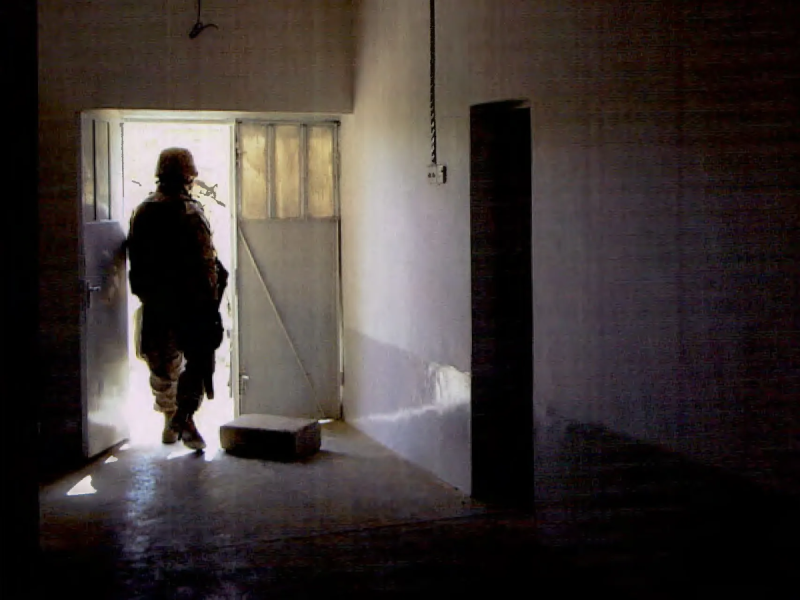
When U.S. Marines killed twenty-four people in an Iraqi town, they also recorded the aftermath of their actions. For years, the military tried to keep these photos from the public.
 August 27, 2024 / Madeleine Baran / The New Yorker - On the morning of November 19, 2005, a squad of Marines was traveling in four Humvees down a road in the town of Haditha, Iraq, when their convoy hit an I.E.D. The blast killed one Marine, Lance Corporal Miguel Terrazas, and injured two others. What followed would spark one of the largest war-crime investigations in the history of the United States.
During the next several hours, Marines killed twenty-four Iraqi men, women, and children. Near the site of the explosion, they shot five men who had been driving to a college in Baghdad. They entered three nearby homes and killed nearly everyone inside. The youngest victim was a three-year-old girl. The oldest was a seventy-six-year-old man. The Marines would later claim that they were fighting insurgents that day, but the dead were all civilians.
After the killing was over, two other Marines set off to document the aftermath. Lance Corporal Ryan Briones brought his Olympus digital camera. Lance Corporal Andrew Wright had a red Sharpie marker.
Briones and Wright went from site to site, marking bodies with numbers and then photographing them. Other Marines, including one who worked in intelligence, also photographed the scene. By the time they were done, they had made a collection of photographs that would be the most powerful evidence against their fellow-Marines.
The killings came to be known as the Haditha massacre. Four Marines were charged with murder, but those charges were later dropped. General James Mattis, who went on to become Secretary of Defense, wrote a glowing letter to one of the Marines, dismissing his charges and declaring him innocent. By 2012, when the final case ended in a plea deal with no prison sentence, the Iraq War was over, and stories about the legacy of the U.S. occupation rarely got much attention. The news barely registered.
The impact of an alleged war crime is often directly related to the horror of the images that end up in the hands of the public. The abuse of detainees at Abu Ghraib prison became an international scandal when graphic photos were published. The Haditha killings had no similar moment. A few of the images that the Marines had made ended up in the public domain, but most have never been released.
In an oral-history interview for the Marine Corps, in 2014, General Michael Hagee, who was the commandant of the Marine Corps at the time of the Haditha killings, bragged about keeping the Haditha photos secret.
“The press never got them, unlike Abu Ghraib,” Hagee said.
The interviewer, Fred Allison, a Marine Corps historian, interjected, “The pictures. They got the pictures. That was what was so bad about Abu Ghraib.”
“Yes,” Hagee replied. “And I learned from that.” He said, “Those pictures today have still not been seen. And so, I’m quite proud of that.”
In 2020, our reporting team at the In the Dark podcast filed a Freedom of Information Act request with the Navy, seeking records that included the photos. We thought that the photos would help us reconstruct what happened that day—and why the military had dropped murder charges against the Marines involved. The Navy released nothing in response. We then sued the Navy, the Marine Corps, and U.S. Central Command to force them to turn over the photos and other records related to the Haditha killings. We anticipated that the government would claim that the release of the photos would harm the surviving family members of the dead. Military prosecutors had already made this argument after the trial of the final accused Marine.
While we were fighting with the military to get the photos, a colleague and I traveled to Iraq to meet with family members of the victims of the killings. They recounted what had happened on November 19, 2005, and their efforts to seek justice, all of which had failed. “I believe this is our duty to tell the truth,” Khalid Salman Raseef, a lawyer who lost fifteen members of his family that day, told me. Another man, Khalid Jamal, was fourteen when his father and his uncles were killed. He told me that he’d spent years wondering what happened in his family members’ final moments. “Did they die like brave men? Were they scared?” he said. “I want to know the details.”
We asked the two men if they would help us obtain the photos of their dead family members. They agreed, and we entered into an unusual collaboration—an American journalist and two Iraqi men whose family members had been killed, working together to pry loose the military’s secrets.
I worked with the lawyers representing us in our lawsuits against the military to draft a form that the surviving family members could sign, indicating that they wanted us to have the photos. Raseef and Jamal offered to take the form to the other family members.
The two men went house to house in Haditha, explaining our reporting and what we were trying to do.
At one house, Jamal told the father of one of the men who was killed while trying to get to Baghdad, “Of course, I am one of you.” Jamal asked him to sign the form, saying, “Things that happened in the massacre will be exposed.” The father, Hameed Fleh Hassan, told him, “The drowning man will cling to the straw. . . . We sign. We sign. I will sign it twice, not once.”
Raseef and Jamal collected seventeen signatures. Our attorney filed the form in court as part of our lawsuit. In March, more than four years after our initial FOIA request, the military relented, and gave us the photos.
(The New Yorker has decided to publish a selection of these photos, with the permission of the surviving family members of those depicted, to reveal the horror of a killing that the military chose not to punish.)
Source: https://www.newyorker.com/podcast/in-the-dark/the-haditha-massacre-photos-that-the-military-didnt-want-the-world-to-see
Additional Material:
- Hegseth, missing war crimes data, and the Haditha massacre, Jan. 14, 2025 / Lauren Harper / Freedom of the Press Foundation
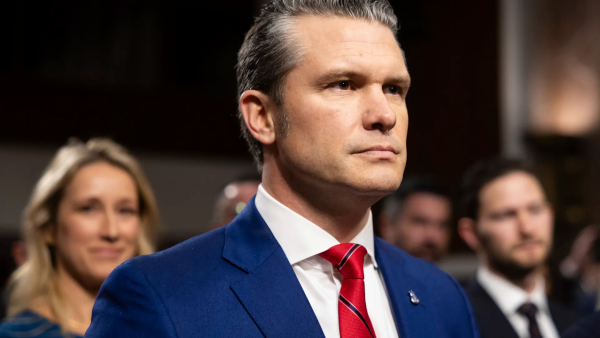 Trump’s pick for secretary of defense, may make it even more difficult to uncover evidence of U.S. war crimes.
The Senate Armed Services Committee is holding a confirmation hearing today for Pete Hegseth to be the secretary of defense. Hegseth is a controversial pick, not least because he has called service members accused of war crimes “heroes” and successfully lobbied President-elect Donald Trump for leniency in their cases.
Obtaining information from the Defense Department on alleged war crimes is already extremely difficult and the DOD may become more secretive if the agency is led by someone who doesn’t think war criminals should be prosecuted. - Read More
Please consider supporting The National Network Opposing the Militarization of Youth
and our work to demilitarize our schools and youth by sending a check to our fiscal sponsor "in our name" at the
Alliance for Global Justice.
Donate Here
###
Updated on Memorial Day 05/25/2026- GDG